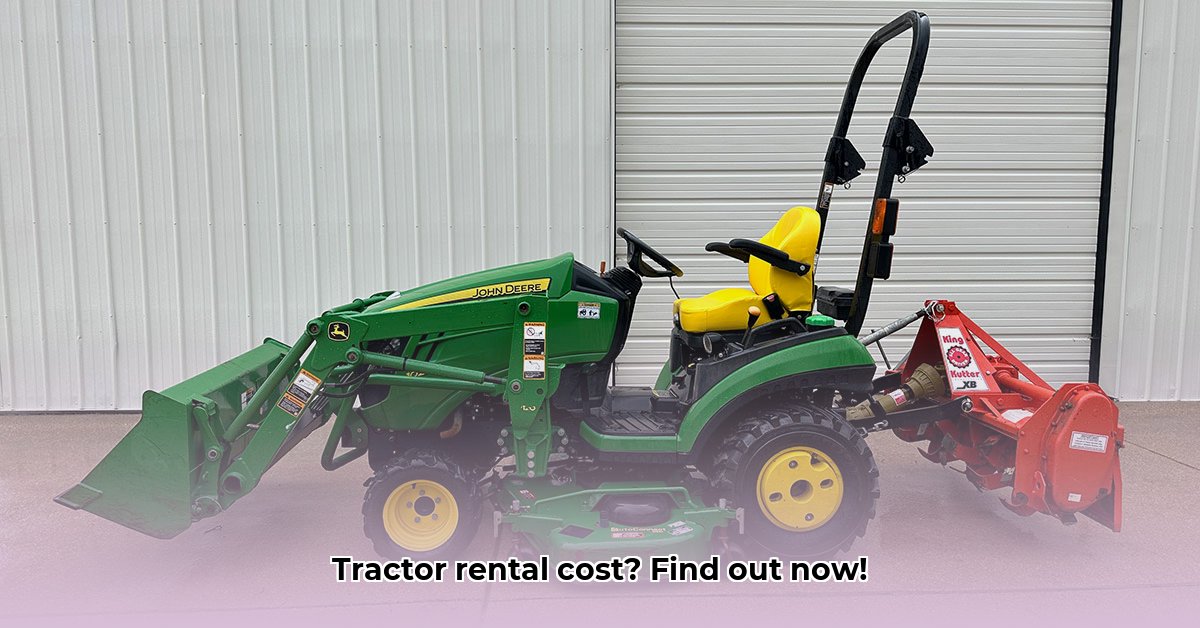
Renting a tractor can be a cost-effective solution for various projects, but the price varies significantly. You can expect to pay anywhere from $190 to over $400 for a 20-horsepower (HP) Kubota, but the final cost depends on numerous factors. For more detailed cost breakdowns, check out this helpful resource: Tractor Rental Costs. This guide will break down the costs and offer actionable steps to find the best deal.
Tractor Size and Horsepower: The Bigger, the Pricier
Tractor rental costs are directly related to horsepower. A small tractor suitable for yard work will be significantly cheaper to rent than a larger, more powerful machine needed for extensive land management. Think of it like car rentals: a compact car costs less than an SUV. Carefully assess your project's needs to avoid paying for unnecessary horsepower. A 20 HP tractor will have a far lower rental cost than its 125 HP counterpart.
Rental Duration: Hourly vs. Daily vs. Weekly vs. Monthly
Rental costs are typically structured to incentivize longer rentals. Hourly rates are the most expensive per hour, while daily, weekly, and monthly rates progressively decrease the per-hour cost. For short projects, hourly rental might be sufficient, but longer projects will almost certainly benefit from a longer-term rental. Always compare rates across different timeframes to find the best value for your situation.
Attachments and Implements: Adding Up the Extras
Many rental companies offer various attachments like front-end loaders, mowers, tillers, and more. Each attachment adds to the overall rental cost. Carefully consider which attachments you need and whether renting them separately might be more economical than bundling them into a single package. Sometimes, it's cheaper to perform certain tasks manually instead of adding a costly attachment.
Delivery Fees: A Hidden Cost
Delivery and pickup fees are often overlooked but can significantly increase the total cost. Inquire about these fees upfront and consider whether picking up and returning the tractor yourself, if feasible, could save you money.
Vendor Comparison: Shop Around!
Prices vary greatly between rental companies. It's crucial to compare quotes from multiple vendors before making a decision. Utilize online resources to quickly compare prices and services. The difference in price between vendors can be substantial—sometimes hundreds of dollars. Don't settle for the first quote you receive.
Labor vs. Self-Rental: Weighing the Costs and Risks
You can choose to rent the tractor and operate it yourself or hire an experienced operator. Self-rental offers initial cost savings, but it also carries risks. Lack of experience can lead to equipment damage, injury, or project delays. Hiring an operator adds to the upfront cost, but it often mitigates risks and ensures efficient operation. Carefully weigh your skills and experience against the potential costs and risks involved.
Fuel Costs: An Often-Overlooked Expense
Fuel costs are rarely included in the initial rental price. You will be responsible for fueling the tractor throughout the rental period. Estimate fuel consumption based on the tractor's specifications, the intensity of the work, and the rental duration. Get a fuel consumption estimate from the rental company for accurate budgeting.
Insurance and Liability: Protecting Yourself
Always clarify the insurance coverage included in the rental agreement. Understand your liability if you damage the equipment or cause injury or property damage while operating the tractor. Consider additional insurance coverage if needed to protect yourself from potentially high costs.
Saving Money on Tractor Rentals
- Negotiate: Don't hesitate to negotiate the rental price, particularly for extended rentals.
- Bundle Services: Inquire about discounts for bundling services or attachments.
- Shared Ownership: Explore shared ownership options or cooperatives; they can significantly reduce individual costs.
Mitigating Risks: A Safer Rental Experience
A well-planned rental minimizes risks. Here’s how:
| Risk Factor | Mitigation Strategy |
|---|---|
| Mechanical Failure | Choose a reputable vendor with a robust maintenance program. Thoroughly inspect the equipment before use. |
| Operator Error | Hire a professional operator, or ensure thorough training and understanding of safe operating procedures if self-operating. |
| Accidents & Injuries | Prioritize safety. Use appropriate safety gear and adhere strictly to all safety guidelines. |
| Property Damage | Secure adequate liability insurance, and operate the tractor with extreme care. |
Step-by-Step Guide to Comparing Tractor Rental Prices
- Define Your Needs: Specify the type of tractor, attachments, and rental duration required for your project. Determine your budget limitations.
- Research Local Vendors: Use online search engines and review sites to identify rental companies in your area.
- Obtain Quotes: Contact multiple vendors, providing detailed information about your needs and requesting comprehensive quotes, including all fees (delivery, fuel, insurance, etc.).
- Compare Prices: Carefully analyze the quotes, focusing on the total cost, equipment specifications, included services, and vendor reputation.
- Verify Vendor Reputation: Check online reviews and testimonials to gauge the reliability and customer service of each vendor.
- Finalize Your Rental: Select the vendor offering the best value and service based on your assessment and complete the rental process.
Remember to always prioritize safety and choose reputable vendors. By carefully planning and following these steps, you can find the most affordable and reliable tractor rental for your needs.